Unlock Creative Possibilities with Watercolor Succulent Clipart
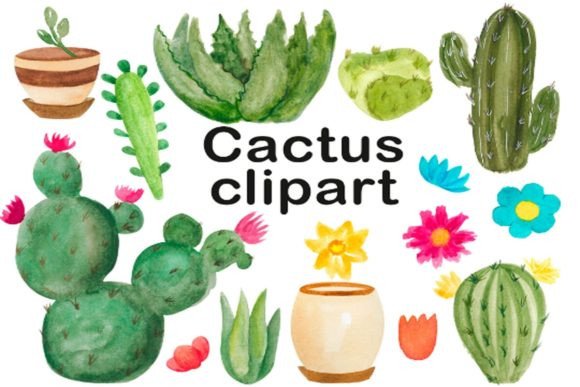
For anyone looking to infuse their creative projects with a touch of natural elegance, a set of Watercolor Succulent Clipart offers a uniquely versatile foundation. This particular collection, often themed as Floral Bot or Floral Botanical succulent clipart, typically comprises 16 separate elements in PNG format with transparent backgrounds. The appeal is immediate: these are not flat, vector graphics, but artistic renderings that carry the soft, blended textures and gentle imperfections of real watercolor paint. This brings a warmth and organic feel to digital designs that standard clipart often lacks.
Many creators, from hobbyists making wedding invitations to professional bloggers designing their sites, gravitate towards such sets because they promise efficiency and aesthetic coherence. However, the journey from downloading a file to successfully integrating it into a stunning final design is where many common, yet easily avoidable, mistakes occur. Understanding these pitfalls beforehand can transform your experience, ensuring the clipart serves as a powerful tool rather than a frustrating limitation.
Overlooking the Importance of File Resolution and Size
A frequent oversight involves assuming all "high-quality" PNGs are ready for any use. When you encounter a set like this Watercolor Succulent Clipart, Floral Bot collection, the immediate excitement might lead you to skip checking the actual dimensions of each file. A 16-element set sounds generous, but if each succulent is only 500 pixels wide, it's perfect for a digital card but will become pixelated and blurry if you try to use it on a large format wedding invitation or a poster. This mistake directly affects the professional quality of your output, leading to a presentation that feels amateurish despite your best creative efforts.
The better approach is to always inspect the specifications before purchase or download. A reputable collection will list the dimensions in pixels or inches. For versatility, look for sets where elements are at least 2000 pixels on their longest side. This gives you the freedom to scale down for web use without loss of quality, and often enough resolution for moderate print projects. Remember, the transparent background is a blessing, but a low-resolution file with a transparent background is still a low-resolution file.
Misunderstanding Color Compatibility and Editing Limitations
The watercolor style is beloved for its specific palette—usually muted greens, soft pinks, and earthy tones. A common misunderstanding is that you can easily and drastically change these colors in a basic editing program like Word or a simple online tool. While PNGs with transparency allow for easy placement, the watercolor texture itself is composed of many layered, semi-transparent pixels. Attempting to "fill" or change the color uniformly often results in a loss of that delicate texture, making the succulent look flat and digitally altered, which clashes with the entire aesthetic.
To avoid this, work with the provided palette as a strength. Use these elements to complement a design color scheme you've already chosen. If you must adjust hues, use a professional-grade software like Adobe Photoshop or Affinity Photo, where you can use tools like "Hue/Saturation" adjustments that preserve the texture layers. Alternatively, select clipart sets that offer variations or include monochrome line art versions alongside the watercolor ones for maximum flexibility.
Failing to Plan for Composition and Cohesion
Having 16 separate elements feels like abundant choice, but without a plan, it can lead to chaotic designs. A mistake many beginners make is using too many of the elements in one project, creating a busy, crowded layout that overwhelms the message—whether it's a wedding invite or a blog header. Each succulent and floral bot is designed to be a component, not the entire scene.
Practical advice is to treat the set like a curated toolbox. Before starting, sketch a rough layout. Decide on a focal point. Perhaps use one larger, detailed succulent as the centerpiece and two or three smaller, simpler elements as accents. This creates balance. For a wedding invitation, a single elegant succulent paired with your text might be more sophisticated than a cluster of all sixteen. The collection is perfect for creating a unified brand across multiple projects—using the same two or three elements across your cards, blog, and digital scrapbooking makes your work recognizable and cohesive.
Neglecting License Terms for Commercial Use
This is a critical area often glossed over by entrepreneurs, small business owners, and freelancers. The phrase "you can create your own creative design" is encouraging, but it doesn't automatically define the scope of commercial use. Many beautiful sets like this Watercolor Succulent Clipart are sold under personal licenses only, or with restrictions on how many end products you can sell.
What you must check before any purchase is the explicit license terms. Look for keywords like "Personal Use," "Commercial Use," "Extended Commercial License," or "Unlimited Projects." If you plan to sell wedding invitations, greeting cards, or branded merchandise using this clipart, you need a commercial license. Investing in a set with the wrong license can lead to legal issues and force you to scrap finished work, a costly mistake in both time and money. Always read the license documentation provided by the seller; reputable shops will make this information clear and accessible.
Assuming All Elements Will Work in Every Software
The PNG format with transparency is widely supported, but not universally handled the same way. A mistake is to assume these files will drag-and-drop perfectly into any application. Some older printing software, specialized invitation platforms, or even certain versions of presentation software might interpret the transparency incorrectly, leaving a white or grey box around your beautiful succulent.
A simple preventative step is to test one file first. After downloading, open a single PNG in the software you intend to use for your final project—be it Canva, Microsoft Publisher, a scrapbooking app, or your professional design suite. Place it on a colored background to verify the transparency works as expected. This quick test saves the frustration of designing an entire project only to find the foundational assets don't function properly in your workflow environment.
Underestimating the Need for Organizational Practices
With 16 separate files, disorganization can quickly erode efficiency. A common scenario: you download the zip file, extract everything into a general "Downloads" folder, and then spend precious minutes searching for the specific succulent you want six months later when starting a new project. For bloggers, educators, and freelancers who reuse assets, this inefficiency adds up.
Adopt a better system immediately. Upon download, create a dedicated folder on your computer or cloud drive named something clear like "Watercolor Succulent Assets – Floral Bot." Inside, you can even create subfolders if the set includes different types (e.g., "Full Plants," "Leaves," "Floral Accents"). Taking two minutes to organize not only preserves your access to these wonderful elements but also encourages you to use them more often, maximizing the value of your purchase.
Ultimately, a collection like this Watercolor Succulent Clipart, Floral Botanical set is a significant creative resource. By approaching it with a mindful eye for technical detail, legal boundaries, and artistic planning, you move from simply having pretty pictures to possessing a reliable, professional-grade toolkit. This allows you to channel your energy into the creative act itself, confidently designing invitations, cards, digital scrapbook pages, and blog layouts that feel authentically beautiful and impeccably crafted.