Practical Applications of Watercolor Floral Daisy Seamless Borders
The integration of a Watercolor Floral Daisy Seamless Border into a design project is often one of the final, yet most impactful, stages of the creative process. It represents a deliberate step toward enhancing visual cohesion and emotional resonance. For professionals and creators, this asset isn't merely a decorative element; it is a functional tool that addresses specific workflow needs like branding consistency, time efficiency, and aesthetic quality control.
Understanding the Asset and Its Core Properties
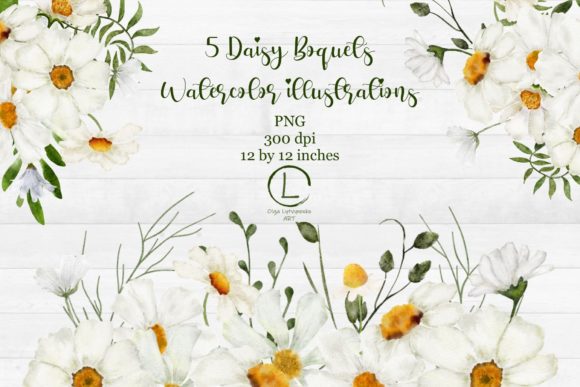
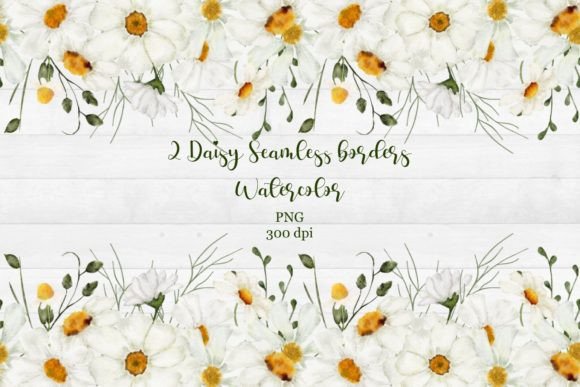
A Watercolor Floral Daisy Seamless Border is a high-resolution digital graphic file, typically provided as a PNG with a transparent background. The "seamless" property is its most critical technical feature, meaning the pattern can be repeated infinitely along an edge or frame without a visible break or seam. This specific border, with its gentle daisy motifs and soft watercolor washes, carries a distinct aesthetic: it is elegant, organic, and universally approachable. When you acquire such an asset, you are usually receiving a ready-to-use component, like the mentioned 12 x 12 inch 300 DPI files. This high resolution ensures the border remains crisp when scaled for various outputs, from digital social media graphics to high-quality printed invitations.
The decision to use this type of border usually occurs after the core content of a project is established—the text for an invitation, the layout of a website header, or the message of a marketing flyer. It functions as a finishing layer, applied to polish and unify the design. Its role interacts directly with other assets like fonts, color palettes, and primary imagery. Selecting a watercolor floral border often dictates a complementary design direction, encouraging softer fonts and muted background colors to maintain a harmonious visual flow.
Integrating Borders into Established Workflows
For a smooth integration, preparation is key. Before even opening your design software, consider the end medium. Will the project be printed or remain digital? The 300 DPI resolution of a proper Watercolor Floral Daisy Seamless Border supports both, but your document setup must match it. In a tool like Adobe Photoshop, Illustrator, or even Canva, begin by creating your canvas at the final intended size. Then, import the border file as a separate layer. This separation is a crucial organizational practice; it allows for easy adjustments, repositioning, and non-destructive editing.
The practical implementation often involves masking and transforming. To frame an entire page, you might stretch the border segment to match your canvas dimensions, relying on its seamless nature to fill the length. To accent a specific section, like a quote box within a blog post, you could clip the border to a smaller rectangular path. The transparent PNG format is vital here, as it lets the border sit on top of other elements without obscuring them. For logo incorporation, the process is more nuanced. A daisy border might be used as a partial frame around a logotype or extracted as a solitary floral element to serve as a secondary brand motif. This requires careful scaling to ensure the logo remains legible and the border does not become overpowering.
Strategic Use Cases Across Professional Fields
The application of these borders transcends simple decoration. They serve strategic functions in diverse workflows.
- For Marketers & Small Business Owners: Consistency across touchpoints builds brand recognition. A Watercolor Floral Daisy Seamless Border used on email newsletters, Instagram posts, and printed event flyers creates a subtle, recognizable thread. It can soften corporate messaging or align a brand with values of nature, care, and craftsmanship. The workflow tip here is to create a template library. Save your designed social media post or email header with the border applied as a template file, so each new piece starts from a consistent, branded base, drastically improving efficiency.
- For Educators & Publishers: Visual cues aid in information hierarchy. In worksheet design or ebook layout, a gentle border can delineate special sections, highlight key takeaways, or make printable certificates feel more celebratory. It interacts with the content by providing structure without harsh lines. Usability is paramount; the border should not distract from the core text. A practical method is to use lowered opacity on the border layer in areas where text overlays it, ensuring readability remains high.
- For Freelancers & Hobbyists: In client work or personal projects, such as custom invitations or blog graphics, the border elevates perceived quality. It replaces the need for intricate, time-consuming hand-drawn edges. The workflow integration point is in the client approval stage. Presenting a draft with a well-applied, beautiful border can often solidify client satisfaction, as it demonstrates a finished, polished vision. It serves as a quality control checkpoint—a design lacking a cohesive framing element may feel incomplete.
Planning for Long-Term Use and Asset Management
A single purchase of a high-quality border asset like this is an investment in long-term creative efficiency. To maximize its value, consider its compatibility with your ongoing projects. Store the original high-resolution PNG files in a dedicated "Brand Assets" or "Design Elements" folder within your cloud storage or project management system. This organization means the asset is always at hand when a new project begins that fits the aesthetic.
Furthermore, think about adaptation. The same Watercolor Floral Daisy Seamless Border can often be recolored using hue/saturation adjustments in your design software to match different seasonal campaigns or product lines—a pink hue for spring, deeper blues for winter. This extends its utility without requiring new asset purchases. However, maintain a version control practice: always start edits from the original, untouched file to preserve quality.
The seamless property also encourages creative use beyond traditional borders. Consider using a rotated or mirrored segment of the border as a background texture for a website footer, or as a repeating pattern inside a shaped badge. This exploratory phase in your workflow, after the primary use is mastered, can lead to unique applications that further differentiate your creations.
Key Factors for Successful Implementation
To ensure the border integrates smoothly and enhances your final output, keep these factors in mind during your process:
- Scale Appropriately: Always scale the border proportionally. Distorting its aspect ratio can break the seamless illusion and muddy the delicate watercolor details.
- Match the Color Profile: If printing, ensure your document and the border asset are in the correct color profile (like CMYK for professional print) to avoid color shifts.
- Context is Everything: The soft, floral nature of a daisy border might not suit a tech-focused, bold corporate report. Its successful use depends on aligning the asset's emotional tone with the project's overall message. This decision happens early in the planning phase, during the mood board or style guide creation.
- Combine with Intent: Don't let the border work alone. Pair it with other watercolor elements or simple, clean lines to build a complete visual language. Its interaction with other design choices is what makes the final composition speak cohesively.
The journey from selecting a Watercolor Floral Daisy Seamless Border to having it actively improve your designs is a straightforward but considered process. It begins with recognizing the need for a unifying aesthetic finish, continues through technical integration in your preferred software, and culminates in the asset performing its quiet work—framing content, guiding attention, and imparting a crafted, magical touch that elevates the ordinary to something memorable. By treating it as a core component in your asset library and understanding its practical role within your workflow, you transform a simple graphic into a versatile tool for consistent, beautiful creation.